I. Curriculum Focus
Subject: Science
Grade Level: Grade 4
Quarter: First Quarter
Content Focus: Matter and Its Properties
Learning Focus
Learners explore common materials by observing their properties, comparing how materials are used, and describing changes that may happen to them. They also connect Science learning to responsible practices such as reducing, reusing, recycling, and proper waste segregation
Learning Competencies - Working Focus
• Describe materials based on observable properties.
• Classify common materials according to their properties and uses.
• Describe changes in materials in familiar situations.
• Recognize useful and potentially harmful changes in materials.
• Practice proper waste segregation and responsible disposal.
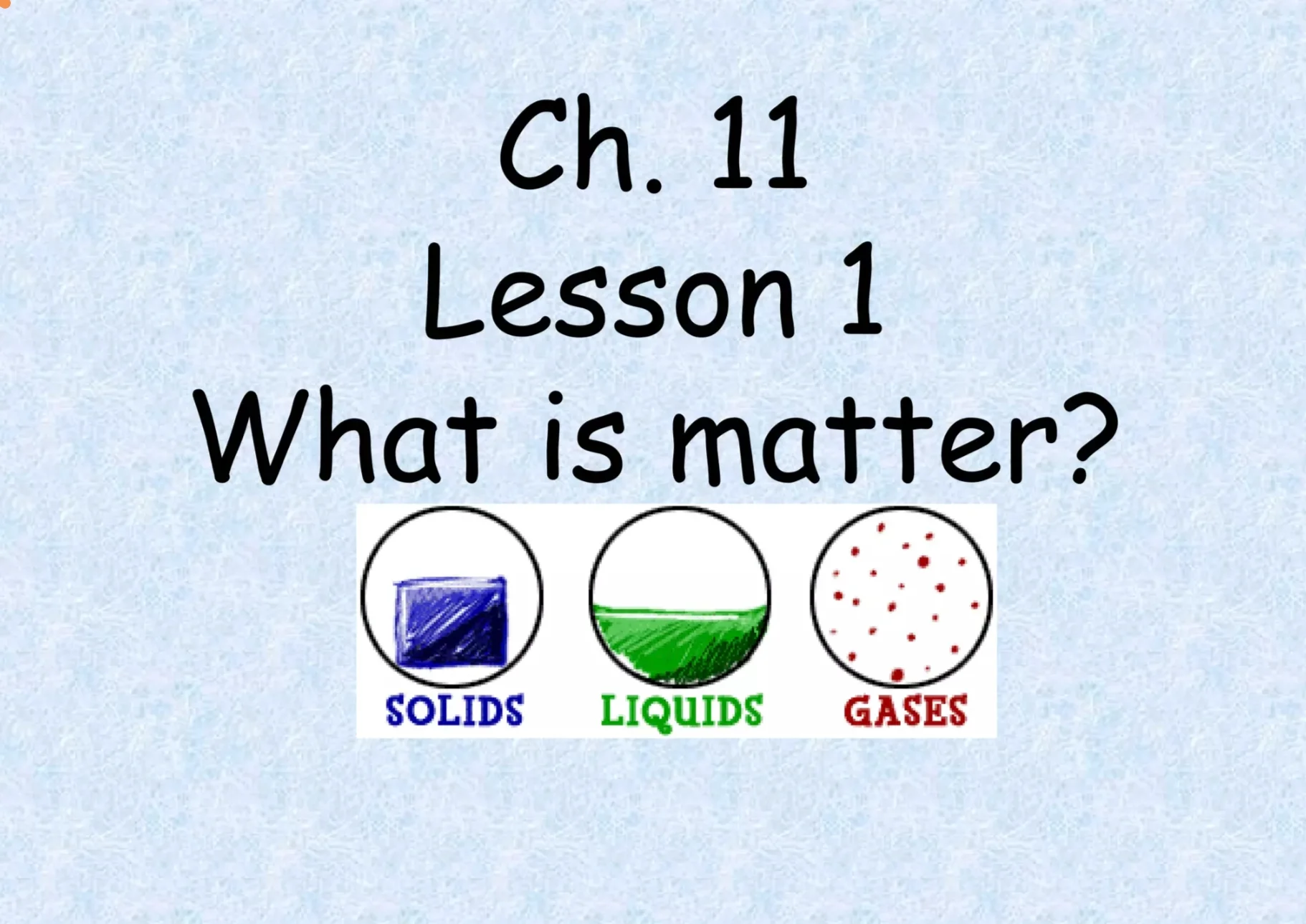
Matter is everything around us that has mass and occupies space. It exists in three main states: solid, liquid, and gas. Each state has its own characteristics that make it different from the others.
In this lesson, you will explore how matter behaves, identify its different forms, and discover examples that you can find in your everyday life.
Remember: Everything around you is made of matter!
III. Artifacts
Artifact 1: Matter Around Us – Picture Cards
Learning Tagret: Identify common materials and describe what can be observed about them.
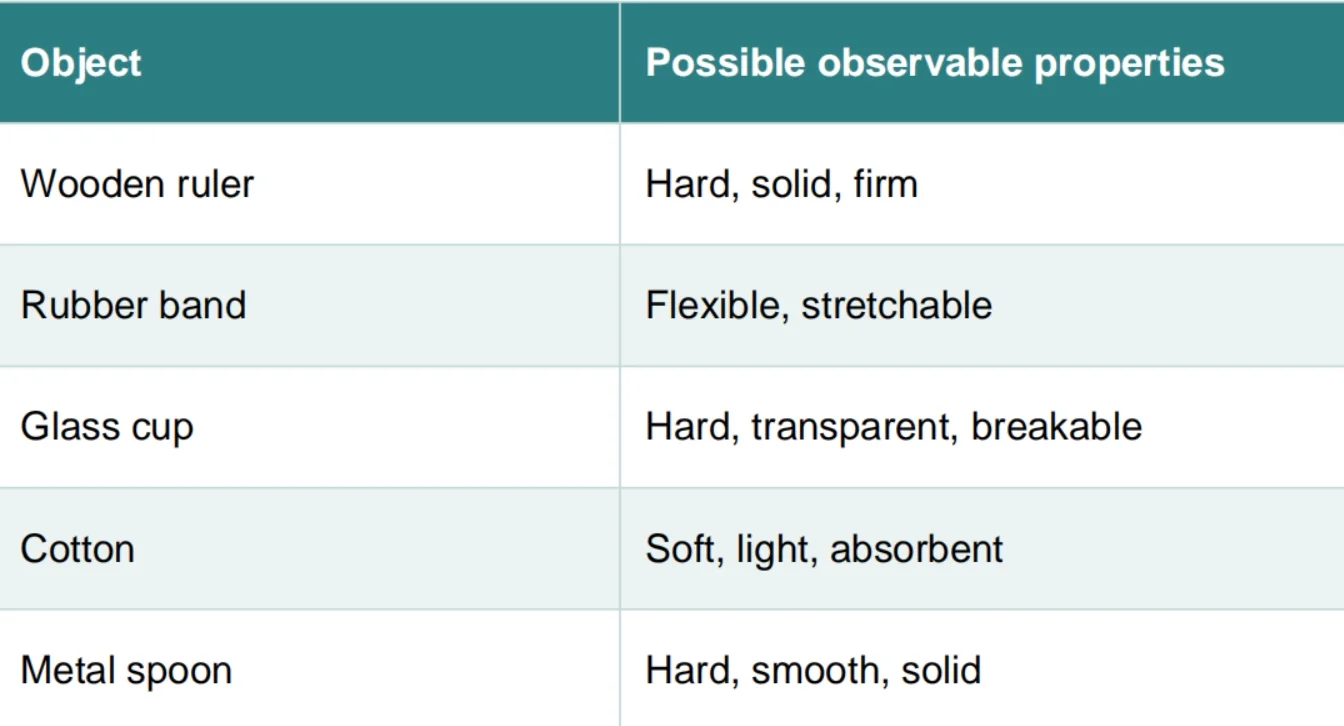
Activity: Look around your classroom or home. Choose three objects, write their names, and describe at least two properties of each.
Guide Questions:
• Which object is flexible?
• Which object is hard or breakable?
• How do the properties of an object affect its use?
Artifact 2: Sort it out!
Learning target: Classify materials based on observable properties.
Directions: Write each object under the property that best describes it. Some objects may fit more than
one category
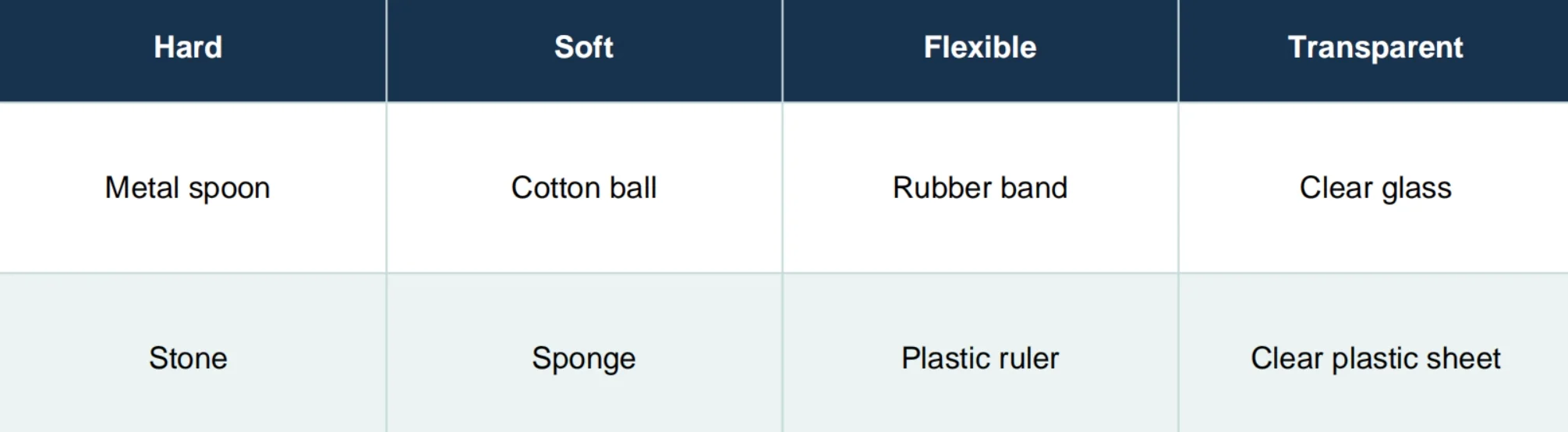
Try this: Add two more objects you can find safely. Explain why you placed each object in its category.
Remember: Classifications may depend on the property being observed. Explain your answer instead of relying only on the category name.
Artifact 3: Changes in Materials
Learning target: Describe changes that materials may undergo.
Materials can change in different ways. Some changes can be observed in everyday life, such as ice melting, paper being torn, or fruit becoming overripe.
Observe and Describe
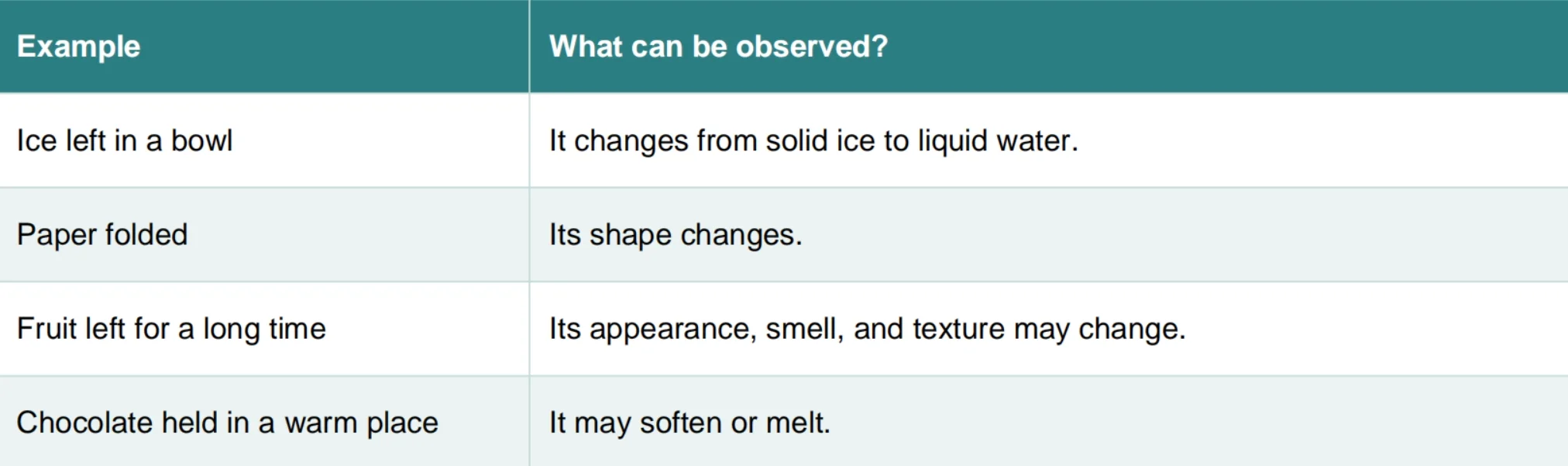
Think about it: Which examples can be reversed easily? Which changes may be difficult to reverse? Explain your answer.
Safety reminder: Do not heat, burn, taste, or experiment with unknown materials. Discuss observations using
safe, everyday examples.
Artifact 4:Useful or Harmful?
Learning target: Recognize that changes in materials may have useful or harmful effects.
Read each situation and decide whether the change is generally useful or potentially harmful. Be ready to explain your answer.
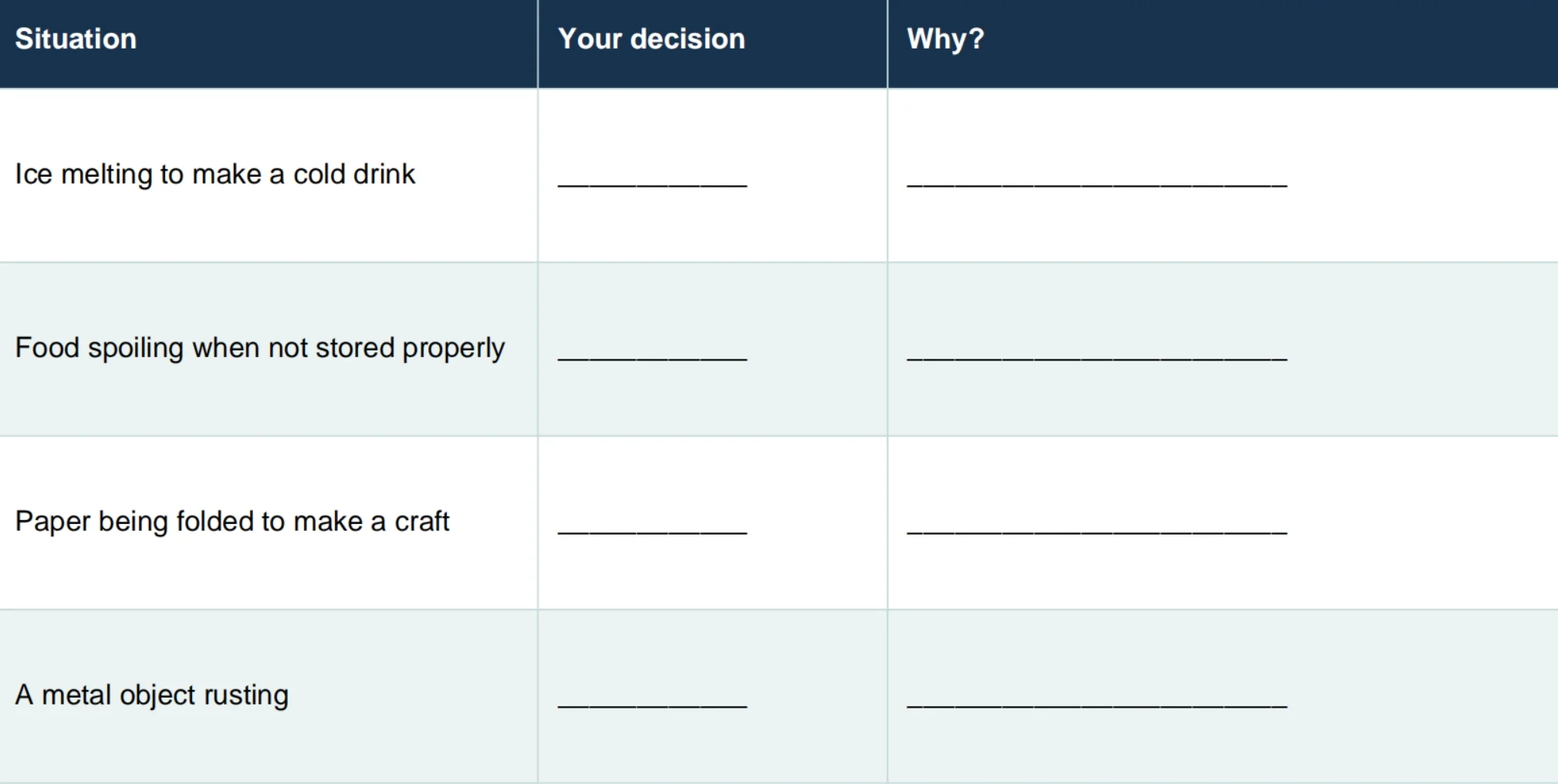
Extension: Think of one more example from your community. Describe the change and its effect
IV. Assessment

Short Quiz:
Choose the best answer.
1. Which property describes a rubber band?
A. Flexible
B. Transparent
C. Brittle
2. Which object is usually transparent?
A. Stone
B. Clear glass
C. Cotton
3. What happens when ice melts?
A. It becomes wood
B. It becomes liquid water
C. It disappears forever
4. Which is an example of biodegradable waste?
A. Fruit peel
B. Glass bottle
C. Metal can
5. Why should waste be segregated?
A. To make more litter
B. To support proper waste management
C. To mix all waste together